Find CE RoHS Run AC Capacitor for Fans, Pumps, and Motors
Explore 30 listings of CE RoHS run AC capacitor options to compare specifications like voltage ratings and capacitance. This guide helps buyers identify suitable fixed capacitors for various industrial and household applications; compare the available evidence and request quotations based on your requirements.
Key considerations
Products List




Comprehensive Sourcing Guide
ce rohs run ac capacitor Sourcing Guide
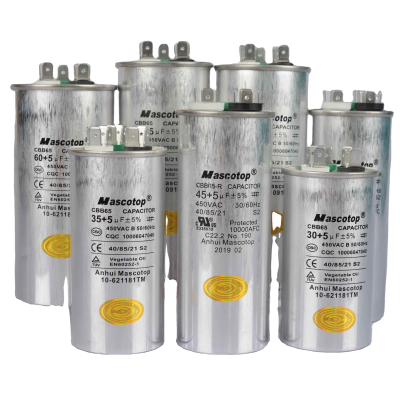
Procuring AC capacitors for air conditioning and motor applications requires careful alignment with specific operational demands and regulatory frameworks. The observed market data indicates a diverse range of products, including CBB61 and CBB65 models, which are engineered for high-frequency bypass and coupling tasks in general-purpose and home environments. Buyers must distinguish between these specific types to ensure compatibility with the intended motor or fan systems, as the internal structure and material composition directly influence performance longevity.
Verification of the product origin and manufacturing standards is equally critical, as the majority of listed items originate from Guangdong, China, adhering to specific national and international benchmarks. Sourcing teams should prioritize suppliers who explicitly document their adherence to standards like GB/T3667 and EN60252, ensuring that the capacitors meet the rigorous safety and performance criteria required for continuous operation in variable climate conditions. This foundational step prevents the acquisition of substandard components that could lead to premature system failure.
Product Scope and Observed Listing Signals
The current market listings reveal a broad spectrum of capacitance values, ranging from 3 microfarads up to 100 microfarads, with specific models like 7.5uF and 35uF frequently appearing in commercial catalogs. These components are primarily designed for air conditioners, fans, and AC motors, utilizing polypropylene materials for the CBB61 series and aluminum electrolytic constructions for other variants. Buyers should note that while some listings suggest a "cheap" price point, the actual cost varies significantly based on the rated voltage, which spans from 150VAC to 600VAC, and the specific tolerance levels required for the application.
Listing signals also highlight the availability of customization options and various packaging types, including surface mount and carton configurations suitable for standard export. However, the observed data presents conflicting information regarding the internal medium, with some entries citing air or organic media alongside polypropylene structures. Procurement specialists must scrutinize these descriptions to confirm the actual dielectric material, as the distinction between polypropylene and electrolytic types dictates the capacitor's suitability for high-frequency versus low-frequency applications within the motor circuit.
Technical Specifications to Verify
Technical due diligence must focus on the rated voltage and capacitance tolerance, as these parameters define the operational safety margin of the component. The observed specifications indicate a voltage range of 150VAC to 600VAC at 50-60Hz, with capacitance tolerances available in J, K, and U classes, representing variations of plus or minus 5% to 10%. Buyers should verify that the selected unit matches the exact voltage requirements of the motor to prevent dielectric breakdown, while also confirming the capacitance value aligns with the manufacturer's design specifications for optimal torque and efficiency.
Insulation resistance and dielectric strength are equally vital technical attributes that require explicit confirmation from the supplier. The data suggests a test condition of 2 times the rated voltage plus 1000VAC for five seconds between terminals and the case, a critical safety metric for preventing electrical arcing. Additionally, the climatic category, which defines the operating temperature range, varies from 25/70/21 to 40/85/21, and buyers must ensure the selected capacitor can withstand the specific environmental conditions of the installation site without degradation over time.
Compliance and Safety Documentation
Regulatory compliance is a non-negotiable aspect of sourcing AC capacitors, particularly for equipment destined for international markets. The observed listings frequently cite certifications such as RoHS, CE, CCC, and ISO9001, alongside safety approvals from CQC, UL, VDE, and TUV. Procurement teams must request valid, up-to-date certification documents for each batch to verify that the products meet the specific regulatory requirements of the destination country, as these approvals often dictate market access and liability coverage for the end-user.
Safety standards also encompass the physical construction and testing protocols that ensure the capacitor can operate safely under stress. The provided facts reference approval standards like UL810 and EN60252, which govern the electrical and mechanical integrity of the component. Buyers should insist on test reports that validate these standards, specifically looking for evidence of the dielectric strength tests and the warranty terms, which are listed as two years in some cases, to ensure the supplier stands behind the product's reliability and safety performance.
Cost Drivers and Commercial Terms
Commercial terms in this sector are heavily influenced by the Minimum Order Quantity (MOQ) and the specific customization requirements of the order. The observed data shows a wide MOQ range, from as low as 1 unit to as high as 10,000 units, with many standard listings requiring a minimum of 100 or 1,000 units. Buyers must negotiate these thresholds carefully, as higher volumes often unlock better pricing tiers, while smaller orders may incur significant per-unit costs or require the purchase of pre-packaged lots that exceed immediate needs.
Pricing structures are further complicated by the variety of packaging and shipping options available, such as standard export packing or cartons, which affect the final landed cost. While some listings mention "cheap" pricing, the actual cost is driven by the complexity of the capacitor, including its voltage rating, capacitance value, and the inclusion of safety certifications. Procurement managers should clarify whether the quoted price includes all necessary documentation and testing fees, ensuring that the total cost of ownership reflects the quality and compliance status of the components rather than just the unit price.
Supplier Qualification and Quality Control
Supplier qualification should extend beyond basic certification checks to include an assessment of their manufacturing capabilities and quality control processes. The majority of observed suppliers are located in Guangdong, China, a region known for its electronics manufacturing ecosystem, but buyers must verify the specific production standards and the consistency of their output. Requesting samples for independent testing is a prudent step, as the data indicates that some listings offer free samples, allowing buyers to validate the physical attributes and performance claims before committing to a larger order.
Quality control protocols must also address the after-sales service and warranty provisions offered by the supplier. The observed facts mention a two-year warranty and a return and replacement policy, which are critical indicators of a supplier's confidence in their product quality. Buyers should ensure that these terms are clearly defined in the contract, including the procedures for handling defective units and the timeline for replacements, to mitigate the risk of production downtime caused by capacitor failures in the field.
Long-Term Procurement Checks
Establishing a long-term procurement strategy requires regular audits of the supplier's ability to maintain consistent quality and compliance over time. As the market for AC capacitors evolves, suppliers must demonstrate their capacity to adapt to changing standards and regulatory requirements, such as updates to RoHS or new safety approvals. Buyers should schedule periodic reviews of the supplier's certification status and production records to ensure that the components continue to meet the stringent demands of air conditioning and motor applications without interruption.
Finally, performance monitoring of the installed capacitors is essential for validating the initial selection and identifying any potential issues early. Buyers should track the failure rates and operational lifespan of the components in the field, comparing them against the expected climatic categories and voltage ratings. This feedback loop allows for continuous improvement in the sourcing process, ensuring that future orders are placed with suppliers who have proven their ability to deliver reliable, high-performance capacitors that meet the specific needs of the application.
FAQs
What certifications do these capacitors hold?
These capacitors hold RoHS, CCC, CE, and ISO9001 certifications. They also meet safety approvals including CQC, UL, VDE, TUV, and Cl. These standards ensure compliance with international safety and environmental requirements for industrial and home applications.
Which capacitance ranges are available for AC motors?
Available capacitance ranges span from 3 microfarads to 100 microfarads for CBB61 models. CBB65 variants offer a range of 1 to 50 microfarads. Specific models like 7.5uF and 35uF are listed, supporting various motor and air conditioner applications effectively.
Can I find suppliers with low minimum order quantities?
Yes, suppliers offer minimum order quantities starting from 1 unit up to 10,000 units. Some specific listings indicate an MOQ of 100 units. This flexibility allows buyers to source small batches or large volumes depending on their immediate project needs and inventory requirements.
How are these capacitors packaged for export?
Products are packaged in cartons or standard export packing. The packaging type is designed to protect surface mount components during transit. This ensures the capacitors arrive safely at destinations in Guangdong, China, or other global markets without damage.
What is the warranty period for these components?
The warranty period for these capacitors is two years. This coverage applies to the product's performance under normal operating conditions. Additionally, after-sales service includes return and replacement options to ensure customer satisfaction and product reliability throughout the warranty term.
Which voltage ratings are supported by these units?
Rated voltages range from 150VAC to 600VAC at 50-60Hz. These units are suitable for high frequency bypass and coupling applications. The voltage ratings ensure safe operation in air conditioners, fans, and general purpose power applications across various electrical systems.
Are free samples available for testing purposes?
Free samples are available for testing purposes upon request. This allows buyers to verify product quality before placing larger orders. The availability of samples supports the evaluation of capacitance tolerance and performance characteristics for specific motor or AC applications.